Eesti keeles

AI Data Centers Are the Power Grid of This Century, and Estonia May Be Positioned Just Right at the Right Time

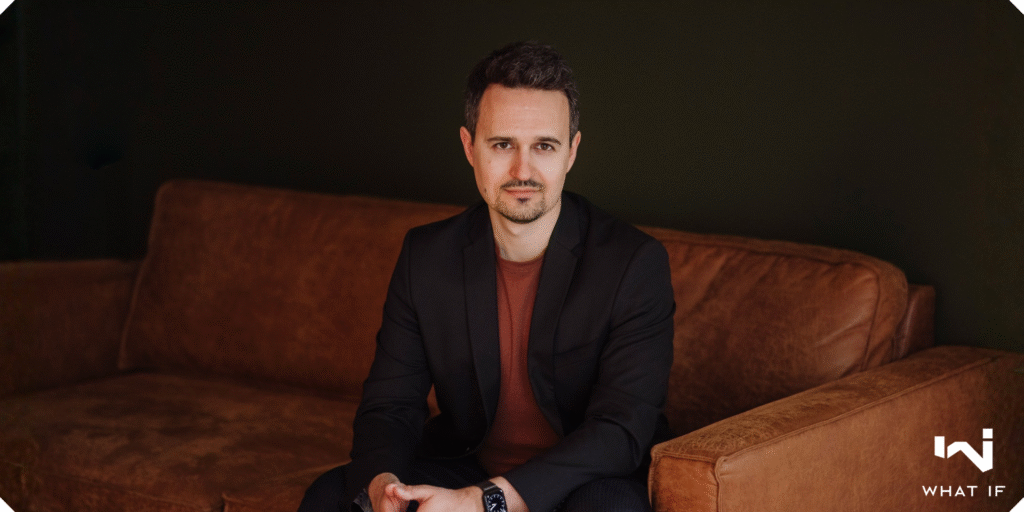
WHAT IF Project Director & Founder Juhan Kangilaski

Estonia’s digital state is known for its efficiency and e-governance, yet its infrastructure still operates on the support of clouds and energy grids managed by other countries. In the age of artificial intelligence, where the need for data processing is growing exponentially, the question arises: where does our real technological independence lie?

The answer no longer lies solely in software, but in physical infrastructure—specifically, energy supply and data processing capacity. These two worlds are now inseparable.

European AI data centers are currently one of the fastest-expanding real estate segments. According to analyses by Cushman & Wakefield and McKinsey, demand is growing by 12–13% annually, doubling over the next five years.

Currently, data centers in Europe consume about 3% of total electrical energy, which will rise to 5% by 2030. This trend is confirmed by the US market, where investments in data centers are surpassing the volume of office buildings. New megaprojects by technology giants like OpenAI, Oracle, and others—such as the 10 GW Stargate project near a Norwegian hydroelectric plant—are bringing hundreds of billions to the construction sector and creating tens of thousands of jobs.

01

Grid connection defines the new price level

Regarding price levels, the European market is highly differentiated: in Frankfurt, London, and Amsterdam, rental rates range from €200–350/kW per month; in Scandinavia, €120–250/kW; while in the Baltics, they remain between €50–150/kW. Although prices in Estonia are on the lower end, the value of “powered land”—land with an existing electricity connection—is growing rapidly. In Central Europe, for example, the current magnitude is €1–3 million per MW, while in the Baltics, it is €0.2–0.8 million per MW. This means that plots with guaranteed grid connections are becoming a new strategic asset class.

THE PARADOX

Today, Estonia’s power grid is largely at capacity. Establishing new large connections takes years, and the cost of network investments has risen sharply. This is the primary reason why international data center operators have so far looked past Estonia. Furthermore, North Estonia’s 110 kV and 330 kV substations are largely reserved—not physically full, but contractually booked.

THE RESULT

We have vacant properties, excellent data connectivity, and a suitable cool climate, but insufficient options for establishing grid connections.

02

Untapped energy potential

However, there is a second, hitherto unused reserve: Estonia’s gas and local energy production infrastructure. Over the last decade, strong LNG and regional gas infrastructure has been built in Estonia—the Paldiski terminal, connections with Finland (Balticconnector), and an extensive distribution network. While consumption decreased after 2022, the infrastructure remains and operates well below its actual capacity.

OPPORTUNITY

This means we have a low-load but ready-to-use energy system that could be quickly applied for local electricity generation.

While wind and solar energy create stability issues, local power generation solutions such as gas turbines, fuel cells, or hybrid micro-stations offer a modular and flexible option to cover the energy needs of data centers. These ensure fast startup capability, autonomous operation, stable voltage and frequency, and the flexibility to switch to biomethane or hydrogen in the future.

Estonia possesses a rare combination: a real infrastructure reserve that can be combined with the growing need to bring data centers to the market.

03

New generation data centers

A more specific solution could be based on small gas turbines, battery storage, or a hybrid solution of solar parks and micro-turbines (5–20 MW) that produce electricity directly for servers running AI models. Heat, which is usually emitted during cooling, can be reused for district heating or producing hot water for buildings. The result is not just energy efficiency, but a symbiosis with local housing, greenhouses, or spas.

In Estonia, such autonomous data centers could rise in several strategic points:

Ülemiste City and Tallinn Ring Road area
Existing buildings and potential synergy

Paldiski
Proximity to the LNG quay

Ida-Virumaa
Cheaper land and cooling water

Southern part of Harju County
Gas network and good logistical access

AI servers consume up to five times more energy than standard servers. GPUs like the NVIDIA Blackwell series require high power loads and liquid cooling, meaning new data centers must be designed with AI processing needs in mind from the start. Over the next five years, AI will already account for 70% of all new data center capacity.

This means that in Estonia, planning and general plans should prioritize AI-ready plots, where it is possible to establish both power and cooling capacity and ensure multi-level fiber connectivity.

SCENARIO

Let’s imagine a 10 MW energy-independent data center is established near Tallinn, with an electricity price remaining around €60–70/MWh. This capacity can serve several AI companies or one regional cloud platform. The residual heat from the turbines (approx. 20 MWt) is directed to a nearby health center and residential district. The entire system is autonomous, works in conjunction with solar and battery storage, and remains independent of the distribution grid.

04

A Paradigm Shift for Real Estate

For real estate owners, this signifies a paradigm shift: energy connection and backup power become as important as location or rental income. 

Powered land and plots with AI data center readiness are becoming a new asset class where value stems from connectivity capacity, not just square meters.

 It is also worth considering symbiotic projects, such as commercial buildings or residential quarters that utilize the residual heat from data centers.

CONCLUSION

Where Do We Go From Here?

Estonia has all the prerequisites to become the new hub for Northern European AI data centers: a cool climate, a secure legal environment, the image of a digital state, and existing energy production infrastructure. If we can strategically organize the unification of energy supply and computing power, Estonia could become one of the most competitive data processing nodes in the region.

In the era of artificial intelligence, success is no longer determined by who has more programmers, but by who has more watts and fewer restrictions. Estonia can choose whether to be a consumer or a creator. And local, energy-independent data centers could be precisely the bridge needed to the future.